
I’ve been buying fruits and vegetables at our local farmers’ market for awhile now, and enjoy the experience. It’s great getting out early, chatting with the sellers (who more likely than not, are the owners of the family operations), running into friends, and having a breakfast pastry and tasting lots of vendor samples while strolling around. I really love the heirloom tomatoes, especially sliced up with some burrata, basil and olive oil. They’re much better than any I could grow, though my farming skills are pretty dicey, so the cards aren’t exactly stacked in my favor.
My wife Jan loves farmers’ markets more than I do, and she really goes out of her way to buy local products–she’s really “loco for local”. Last night she happily reminded me that the tuna in the Salad Nicoise was bought from a fisherman in Eugene, from one of our trips visiting our son at college. And the olive oil is from Corning, a stop on the way back from Eugene. Local in a roundabout sort-of-way.
Of course, not everything can be local. A lot of my shoes and clothes are made in Italy, though I know there are a lot of local clothes designers in the Bay Area–at least for women. My favorite sport is baseball, and Rawlings MLB baseballs are made in Costa Rica. (Interesting aside–a typical Major League game uses about 100 baseballs). And I‘m not a nutcase about local–it’s just interesting to know where the things you use and eat come from.
Speaking of good food, I recently noticed a burst on the front of my Lay’s Potato Chip bag (their regular potato chips rank as one of the world’s great snacks) and realized that even Frito-Lay, the world's biggest snack-food maker, is getting into the locally-made act. “Discover where your Lay’s chips are made” it proclaimed. (Don’t you just love to see bursts get noticed?).
They are focusing on 80 “local” farmers from 27 states who grow the potatoes used to make its chips. Want to know where your chips come from? Grab your bag and go to
http://www.fritolay.com/lays/chip-tracker.html
and then enter your ZIP code and the first three digits of the product code from the bag and up comes the location of the plant from where they were made. Intrigued, I checked my potato chip bag and found out they were made in Modesto. The site goes on to say that Lay’s bought 283 million pounds of potatoes from California farmers last year. Which I’m sure helped out the local economy in the Central Valley tremendously.
"Knowing where food is made and grown is important to consumers," says Dave Skena, vice president of potato chip marketing at Frito-Lay. "Sharing with consumers how regional we are is relevant and compelling."
OK, Dave, calm down. It’s not that compelling. But it is interesting to see how very big companies can take a trend and run with it. And sometimes with weird twists–I’ve read of spas advertising “farm-to-spa” by integrating locally grown fruits and herbs into skin treatments and massage therapies. At least Lay’s is still taking the potatoes and frying chips. And though rabid locavores would probably insist on frying their own chips (I’ve done that–they’re tasty but pretty time consuming), the Lay’s ingredients are very straightforward: “Potatoes, Sunflower Oil, Salt."
My business partner, Francine Pinoni, is from Michigan. One of the Lay’s TV spots features Michigan farmer Brian Walther, who appears with his brother, Gary, in a spot that aired in that state and tells viewers: "Next time you grab a bag of Lay's in Michigan, think of us." Considering how many people Francine knows in Michigan, she may even know these guys.
"Lay's Local" was the brand's biggest 2009 campaign, and it seems to still be going strong. It doesn’t claim that its products are locally grown, but, rather, it’s “celebrating the contributions people and communities across the country have made to the Lay's brand."
And to their credit, the campaign reminds us that Frito-Lay is an American brand that supports American farmers in tough times. Just like I do, when I pick up my heirloom tomatoes each Sunday at the farmers’ market.
Bon Appétit!
Jim Walcott-Ayers
Partner
Friday, September 3, 2010

Monday, August 30, 2010
Meet Our Summer Intern!

Meet our Summer Intern!
Hi, I'm Lauren Pereny and i'm visiting from Michigan to stay with my aunt, Francine. I'm 15, 16 in October, and in the fall will be a junior at Lamphere High School. I'm interning here at WAG for three weeks, and I'm really excited to get going. Being new to the working world, I'm anxious to learn a lot on how businesses work. This is my first job-like experience, but I definitely know what it is liked to be coached. I'm on the varsity dance and track and field teams at my high school. I also have participated in two school musicals and was the student director for the fall play. I belong to the drama club, and also something called Interact, where we do community service projects such as caroling for senior citizens or fundraising to donate money to a worthy cause. This year, I was also given the opportunity to become a Link Leader. We coach the upcoming freshman and welcome them into our school, giving them a helping hand along the way.
I have a love of traveling and learning about new cultures. I'm a big fan of history and the arts. Music is a huge part of my life and I could literally live at concerts, I enjoy them so much. I'm a big fan of photography and I love to be inspired. So everyone should get ready to put up with me for the next couple weeks, because I'm raring to go.
Tuesday, August 17, 2010
Social Media Q&A

Social Media Q & A with Justin Noland, WAG's Social Media Manager:
We know you have some questions so, let’s take a moment and get to know the person that is ready to take your brand’s social media presence to the next level.
FP: When did you start in social media?
JN: Personally speaking, I started being active in social media five years ago with the breakout of MySpace. I was also quickly entranced with the blogging world as I saw well written and current information about topics that mattered to me.
Professionally, I became interested in what this age of new media opportunities would mean to the marketing profession about two years ago. I entered UC Berkeley’s Haas School of Business specifically because of their progressive stance in the education of Marketing MBA candidates. The opportunity to learn from the innovators and build my understanding based on the forward thinking of the faculty was too great to pass up.
FP: What is social media?
JN: Social Media is a term that describes a variety of new mass media outlets, but it’s more than that. It is the building of relationships, the conversations between people and a different type of outlet for new information and content. From a business standpoint, it represents a new way to engage your target consumers in a meaningful and impactful way.
FP: What is a social media campaign?
JN: A social media campaign starts with the development of a message and a voice for your brand. The brand takes that message, reaches out to the target consumer and delivers it in a creative and relevant method, while giving the consumer some level of incentive to pass the message along to their friends creating viral growth. The incentive here does not always have to be a coupon or a prize, but could be a simply a form of entertainment, a laugh, or just quality information.
FP: How do you monitor social media for a client?
JN: Great question, there are a variety of ways to monitor social media and new products are continually being developed in order to gain better insight from a marketing standpoint. Right now, I’d have to say that my favorite tool is Brandwatch. It is a cost option, but I feel it provides the right tools needed for a brand to really understand what is being said out. Specialty tools within Brandwatch also help you keep tabs on a particular campaign and can even help you understand what your competitors are doing. So far, Brandwatch is the most comprehensive way to monitor your brand on social media.
FP: How do you measure ROI?
JN: I’d love to take credit for this answer, but I can’t. My answer to this question comes straight from Olivier Blanchard who writes “The Brand Builder” Blog. If you haven’t read his blog, I would encourage you to and to watch his video presentation on social media ROI. It is not only informative, but will help you when deciding on which agency to hire to assist you in your social media ventures.
Measuring ROI in social media is pretty much the same as measuring it in traditional marketing. The bottom line question is “what did I get for what I spent?” If you have developed your campaign the right way, by setting clear goals and setting a baseline for analytic measurement, then simply take the metrics from your monitoring tools (I’m a fan of Omniture, but Google Analytics is helpful too) and see how they correlate to higher sales, better customer retention, or whatever your primary markers for success are.
Then we look for trends. Is traffic up in-store after posting on Facebook? What about Twitter? Does a higher sentiment analysis on Twitter lead to a larger basket size or more trips? Finding trends and tracking them back to their point of origin is the key to measuring ROI.
FP: How do you build an audience?
JN: This really depends on the campaign and what our goals are, but for most campaigns it simply comes down to engaging the consumer with relevant information. Just by joining the conversation and providing the consumer an incentive to listen, your audience will grow.
However, depending on the type of campaign, using Facebook ads or banner ads on the right kind of blog can certainly help build awareness of the campaign.
FP: Do you offer a guarantee?
JN: Yes and no, I always guarantee that I will work hard for my clients and represent them is the best way possible. I guarantee that I will give sound social media advice and always be open to the conversation that’s out there. I am not the guy that is going to guarantee a higher SEO or a certain number of fans because that just isn’t the best approach to social media. Plus, marketing is only one step in the brand equation and a multitude of other factors affect consumer behavior.
FP: How does social media impact SEO?
JN: SEO in its most simplistic form is about generating a higher number of links to the page or site that you want to promote. So, a simple answer is that social media will help generate more links. It’s more complex than that though. Social Media helps build relationships with your consumer base. The more loyal your consumer is, the more likely they are to want to pass along your information. That is what generates links.
FP: Outside of school, how do learn more about social media?
JN: By keeping my eyes open and reading plenty of blogs. Social Media is constantly changing. Understanding these changes and their effects is necessary to be best prepared for the future. Just be open minded and objective. Will this tool help? If the answer is yes, you need to learn more.
FP: What are your thoughts on developing a brand’s voice on social media?
JN: I am of the school of thought that having an anonymous “brand voice” is not the way to go in social media. Social participation works best when done by an individual, real or not. Many companies operate their Facebook page or Twitter account anonymously without identifying the person actually responding to customer inquiries and comments. This detracts from the effectiveness of the effort.
So the question is less about what my brand’s voice should be, but what the individual should sound like. They are the brand ambassador and should reflect the brands goals, passions and interests, while remaining personable and interesting. However, the voice depends more on the target audience that you are engaging with then it does the brand itself. Who are you talking to? What do they expect from your brand? What are their goals in life? Listen, understand and engage.
Have more questions? Email Justin yourself at Justin@wag.com
Francine Pinoni
WAG Partner
Friday, June 18, 2010
The name change that isn’t a name change
Recently, we undertook the task of rebranding Walcott-Ayers Group, officially changing our name to WAG. The acronym was already in wide use–email addresses, website address, the shorthand way we were referred to by our clients and by ourselves–but that wasn‘t the driving force behind the change. There have been major changes in CPG Marketing, and we have been actively involved in new ways to target shoppers for our clients from start to finish. This isn’t a reflex action, but rather a studied and conscious decision to ride the forefront of a new marketplace. OK, that sounds pretty good, right? I’ll buy it. Onward.

We were torn. Some of our clients were torn. We explored several ideas that kept the old dog, or a version of the dog, by putting the image onto a shopping bag (remember the “Shopper” part of this new identity). They had a nice look, but, combined with the shopping bag, they all tended to subtly (or maybe not so subtly) suggest that we were a purveyor of dog toys. Or in the business of dog grooming. Which we decidedly are not.

But it was hard saying farewell to the dog. Do you really want to turn your back on an old friend? But then we hit on a possibility of keeping a hint of canine. (And we do mean a hint).

See it? See the tail wagging? Now we just needed to get the dog presence and the Shopper presence all playing happily together with the type. We picked up the idea of the shopping bag from the “doggy boutique” idea, and replaced the dog with the wagging tail icon. We then started the color studies.

The beauty of having several people work on a project is that you get a whole bunch of ideas - and those ideas spark others (it’s not really stealing when you own the company). For instance, one of the designers had hand-drawn a logotype early on in the process. It had a certain appeal, but some people saw it as old fashioned (and the “w” in particular set off some Freudian anxiety in some) so we sent it back to the drawing board where it emerged much jauntier (and with no more anxieties).

So we’ve done the color studies (dozens and dozens), worked on the dog (or at least the tail of the dog–and no, not the hair of the dog), written taglines to neatly sum up what we do, and now we finally join the computer drawn type with the image and tagline and here we are:

Then it’s redesign the website and the Facebook page, redesign the business cards, letterhead, mailing labels, CD labels and all the rest. We’re getting there. Welcome to the new world of WAG. Design Powered by Shopper Insights. And yes, we can explain it. just call us.
Jim Walcott-Ayers
WAG Partner
Thursday, June 17, 2010
Ready for the QR Code Revolution?

What's The Buzz,
Tell Me What’s Happening!!
(borrowed from Jesus Christ Superstar, the Rock Opera!)
What is the buzz with marketers and retailers
in America? What is going to take American
consumers by storm?? QR Codes! What are
QR codes, how do they work and what can they do?
According to our trusty Wikipedia, "A QR Code
is a matrix code created by Japanese corporation
Denso-Wave in 1994. The 'QR' is derived from
‘Quick Response’, as the creator intended the code to allow its contents to be decoded at high speed.” And high speed they are, as they rapidly fire across all measurement of consumer communication.
This two-dimensional bar code is quickly on the rise. In the past five years American consumers may have seen these little codes buried in the legal area of their consumer products. The on-pack QR code helped the manufacturer track parts, production, expiration dates, pricing and an entire myriad of information. But, the life of the QR is expanding rapidly as they are easy to generate, easy to execute and easy to utilize.
How do QR codes work? If you have a cell phone that has a camera and the right app, you can use a QR code. You point your camera phone to the QR Code, snapping a photo. The QR code decodes instantly and voilà: the browser on your phone launches, directing you to the webpage or program that was linked to the specific QR code you just scanned! You’ve now opened up a
whole new world!
QR codes can be used (and are being used!) for special offers and promotions, coupons, websites, maps and directions, menus, as well as other less obvious links: bus signage, business cards, postcards, marketing collateral, real estate signage, security clearances, the list is endless. You can create QR codes for phone numbers, events, emails, data lists, or for whatever your mind creates the need for. Then, you can measure the data- the number of scans, the number of responses, the dates and times people used them. Using this information you can determine the ROI and how they measure up against other vehicles/channels.
In 2007, British pop group Pet Shop Boys used a QR-code for the artwork of their download-only single “Integral”. The video clip for the song also featured a QR-code. When the codes were scanned correctly, users are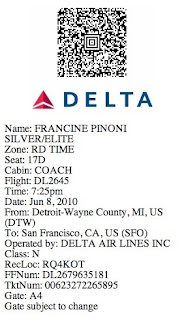 directed to the Pet Shop Boys website and web pages about the British national identity card.
Now that we know what QR codes are, how they work and what you can do with them, they will certainly become a marketing gold mine as consumers look to achieve information or offers with QR codes. This gold mine could further be enhanced with the use of Social Media. When Brandweek asked US Facebook Users why they join Fan pages (March 2010), 37% answered ‘to receive coupons and discount offers’. As these Facebook users turn to their ‘fan pages’,
marketers will provide unique promotional offers targeted directly to them using a QR code. For Example...A Haagen-Daz (HD) Facebook ‘Fan’ visits the HD Facebook page and finds a QR code. They ‘shoot’ the code to learn that they have just received a ‘BOGO’ offer exclusively at Safeway. In doing so, they make themselves happy HD consumers, they make the retailer happy
gaining a ‘stock up’ trip with this HD shopper and they helped increase
market share for HD shareholders. A win-win-win!!
How do QR codes work? If you have a cell phone that has a camera and the right app, you can use a QR code. You point your camera phone to the QR Code, snapping a photo. The QR code decodes instantly and voilà: the browser on your phone launches, directing you to the webpage or program that was linked to the specific QR code you just scanned! You’ve now opened up a
whole new world!
QR codes can be used (and are being used!) for special offers and promotions, coupons, websites, maps and directions, menus, as well as other less obvious links: bus signage, business cards, postcards, marketing collateral, real estate signage, security clearances, the list is endless. You can create QR codes for phone numbers, events, emails, data lists, or for whatever your mind creates the need for. Then, you can measure the data- the number of scans, the number of responses, the dates and times people used them. Using this information you can determine the ROI and how they measure up against other vehicles/channels.
In 2007, British pop group Pet Shop Boys used a QR-code for the artwork of their download-only single “Integral”. The video clip for the song also featured a QR-code. When the codes were scanned correctly, users are
directed to the Pet Shop Boys website and web pages about the British national identity card.Earlier this month I checked in for my Delta flight from Detroit to San Francisco. I was offered a ‘digital’ boarding pass, which I quickly signed up for. After telling them what type of phone I had, my desired phone number for my ‘boarding’ text and my phone operating system, I received my text message within seconds. I opened the text and there it was, my personal QR code for my flight! I used it at security and I used it at the gate. I LOVED it. I didn’t have to remember my paper boarding pass, I just needed my phone! I admit I got slightly panicked a few times when I feared the loss of my paper pass, but that fear ended quickly and I was silently thrilled by my QR ‘secret code’!!
The Pet Shop Boys and Delta Airlines aren’t the only groups utilizing QR codes and bringing them mainstream to the US consumer. Facebook just recently announced that they were enabling users to generate custom QR Codes. On the example provided, they are suggesting two QR codes for your
personal profile: 1) Personal QR Bar code and 2) Status QR Bar code. Now your friends and associates can scan your QR code to download all your personal information! Maybe they need directions to your house? Your personal QR code is their answer!!
The Pet Shop Boys and Delta Airlines aren’t the only groups utilizing QR codes and bringing them mainstream to the US consumer. Facebook just recently announced that they were enabling users to generate custom QR Codes. On the example provided, they are suggesting two QR codes for your
personal profile: 1) Personal QR Bar code and 2) Status QR Bar code. Now your friends and associates can scan your QR code to download all your personal information! Maybe they need directions to your house? Your personal QR code is their answer!!
Now that we know what QR codes are, how they work and what you can do with them, they will certainly become a marketing gold mine as consumers look to achieve information or offers with QR codes. This gold mine could further be enhanced with the use of Social Media. When Brandweek asked US Facebook Users why they join Fan pages (March 2010), 37% answered ‘to receive coupons and discount offers’. As these Facebook users turn to their ‘fan pages’,
marketers will provide unique promotional offers targeted directly to them using a QR code. For Example...A Haagen-Daz (HD) Facebook ‘Fan’ visits the HD Facebook page and finds a QR code. They ‘shoot’ the code to learn that they have just received a ‘BOGO’ offer exclusively at Safeway. In doing so, they make themselves happy HD consumers, they make the retailer happy
gaining a ‘stock up’ trip with this HD shopper and they helped increase
market share for HD shareholders. A win-win-win!!
Wednesday, June 16, 2010
Help WAG Help "The Young Faces of ALS"

For those of you not familiar, ALS (commonly referred to as Lou Gehrig’s disease) stands for Amyotrophic Lateral Sclerosis. In short, ALS is a progressive, fatal, degeneration of motor neurons, the nerve cells in the central nervous system that control voluntary muscle movement. People who suffer from ALS slowly become paralyzed while all mental capacity remains intact. It’s a disease that you wouldn’t wish on your worst enemy.
Morgan
Thursday, May 27, 2010
What’s Up Kraft Sandwich Shop and Miracle Whip?

I’m focused on Kraft Mayonnaise and Kraft Miracle Whip sandwich spread and I know why. Kraft is out there heavily promoting both. I don’t even like mayonnaise but recently it’s been a part of my life. That’s how Brands are. Even if you’re not even interested in them, you don’t buy them or you don’t engage with them, they have a way of sneaking into your life. It is almost impossible not to have involvement with Brands no matter what. Here’s why:
Kraft just launched their new flavored mayonnaise “Sandwich Shop Mayo”. Woo! What took them so long? Consumers have been eating (and loving!!) flavored mayonnaise since…hmmmm, how long exactly? I wondered so I used ‘The’ Google (http://whatscookingamerica.net/History/SauceHistory.htm) and The Google says that the mayonnaise history can not be traced exactly, but mayonnaise can be traced back to the 1756 French capture of Mahon, a city on the Spanish Isle of Minorca. Okay, enough of that, lets get back to Kraft.
So, Kraft introduces a line of flavored mayonnaises-the SANDWICH SHOP MAYONNAISE: a sku of reduced fat Chipotle, Garlic & Herb, Horseradish-Dijon and regular Hot & Spicy. They use HGTV design star judges to help introduce the product in a reality TV type format. Using these designers for this product was a little disconnecting for me. Does Kraft want me to believe that because Vern Yip knows feng shui for living rooms, he can ‘design’ a sandwich too? Vern may pull together a color palette for a kitchen but is a color palette really necessary for a sandwich? I’ve been in the design world my entire life and no way do I think I could build a better sandwich then legendary Alice Waters, or even my German engineer husband, just because I studied and practiced design for over 30 years!
I do think the time for flavored Mayonnaise has come though! We’ve had Dijonaise (whatever happened to that product?), Baconaise (we all KNOW what happened to that product!), and even the giant fast food legend Burger King has served aioli on their burgers! The time has come and Kraft is letting me know.
But while the brand managers for the new and exciting Sandwich Shop Mayo are jumping up and down with their new consumer-desired product, celebrity spokesperson, big TV, radio and print campaigns, just down the hall are their Miracle Whip (MW as abbreviated by the brand team) counterparts and unfortunately for them, they are the David of the ‘Sandwich Shop’ Goliath.
How does one market ‘Miracle Whip’ against these new and highly touted consumer flavor profiles? Of course the growing Hispanic market desires a Chipolte Mayonnaise! And the Gourmet suburban ‘indulger’ shopper has desired Horseradish-Dijon Mayonnaise for years! This new Kraft product is the answer to their dreams, right? So what happens to Miracle Whip and who exactly buys that product?
I used The Google again to find PR on MW but the most current news I could find was from May of 2009. In this article (http://www.prweekus.com/putting-the-zing-back-in-miracle-whip/article/154459/), the SVP of marketing says they ‘reinvented Miracle Whip’. They are targeting the 18-34 year old consumer. Their research shows that this younger segment has fond memories of Miracle Whip, that this consumer group enjoyed MW when they were younger and with the economic situation they’re facing, it’s the perfect way to get MW into this consumer’s kitchen. GREAT! Interesting strategy for an historic brand that is competing for share of stomach against their own colleagues offering a brand with strategic flavor profiles (and every consumer knows what mayonnaise is but what exactly is Miracle Whip anyway?).
‘Miracle Whip vs. Mayonnaise’ has always been a debate and definitely a consumer preference. This debate was further sparked by a Comedy Central remark made by legendary comedian Steve Colbert, who chose Mayonnaise over Miracle Whip when given the choice during an episode of his ‘Colbert Report’. The MW brand team catapulted the remark into their social media and traditional marketing campaigns to reach their 18-35 year old audience. Using Twitter, Facebook and a ZINGR branded browser plug-in, the brand believes MW ‘zings’ and now they can ‘zing’ the product to the digital world where their target is active.
Well, lots have happened in a year of zinging! They utilized Facebook to ask consumers to ‘take a stand’ against mayonnaise and have compiled 20,357 friends! While this doesn’t seem like a big number, when compared to the Kraft Mayonnaise Facebook page with 162 friends, the MW campaign is a huge success!! They utilized Facebook to encourage debates and discussions on consumer’s love of MW vs. Mayonnaise and to further capitalize on the Steve Colbert debate, they purchased every commercial timeslot during the Colbert Report on Thursday, November 12 to dominate the airspace with Miracle Whip consumers ‘snarfing sandwiches’ topped with, what else?, Miracle Whip.
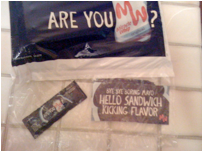
It’s all good at the Chicago office of Kraft Miracle Whip. The brand has defined the consumer, got the touch points down, got a brilliant campaign to go against their Flavored Mayonnaise ‘Sandwich Shop’ colleagues, so now, I’m just wondering, what demographic data did they look at when they decided to use Red Plum’s Newspouch to deliver me a sample of their MW product within my Sunday San Francisco Chronicle?
In the last ten years, readership of newspapers in the core demographic group that MW has decided to go after has fallen 35-40% based on Scarborough Research survey data.
I’m definitely not their target as I’m not 18, 26 or 35, I’m not economically challenged and I don’t even purchase mayonnaise let alone a ‘sandwich spread’. Lets not forget my consumer segment is double income, empty nesters, indulgent and organic. We are so off the Miracle Whip target. Not only that, I find something very wrong with offering sandwich spread within a plastic newspaper bag. Is Miracle Whip sensitive to heat? How about when it’s in wrapped in plastic twice and it sits in the sun for four or more hours? Does it need to be refrigerated? Maybe the MW brand team did consider this. For their target, maybe food quality doesn’t matter as long as it’s free??
And, maybe those hipster Miracle Whip marketers may need to rethink their ‘kick up’ the flavor copy. I really need to know how mayonnaise (or any sandwich spread) kicks up anything? And, I’m not alone in wondering about the ‘non-taste’ of sandwich spreads and mayonnaise either! Evidently there are many us ‘I hate mayonnaise’ people out there as there’s even a website: www.world-of-mayo.com.
So Kraft, save your money on sending samples out to people that you have already decided are not going to buy your product. Instead, continue to execute the promise that your viral campaign has to offer. Extend it further by going guerilla on people and hitting the streets to target your demographic! Set up sandwich shops at tailgating spots and deliver the samples directly to the people. Take photos, post them to Facebook, announce where the next pop-up sandwich shop is going to be and when!
Cross Promote with sandwich king Subway or sponsor contests that build creativity and brand awareness! Bring it all back by actually using social media to advertise these events, contests and build your brand in the process!
You want web 2.0? You want hipster? You want new age marketing tactics? FORGET NEWSPAPERS! Stick to your guns and dive in, the young and spending shopper awaits, but he’s not reading the morning paper.
Just my thoughts on a Sunday morning! I’m off now to eat my German husband’s breakfast sandwich. (made without the free MW packets we got this morning in our Sunday paper!!).
Subscribe to:
Posts (Atom)


